Episode Transcript
[00:00:00] Speaker A: Proactivemd.
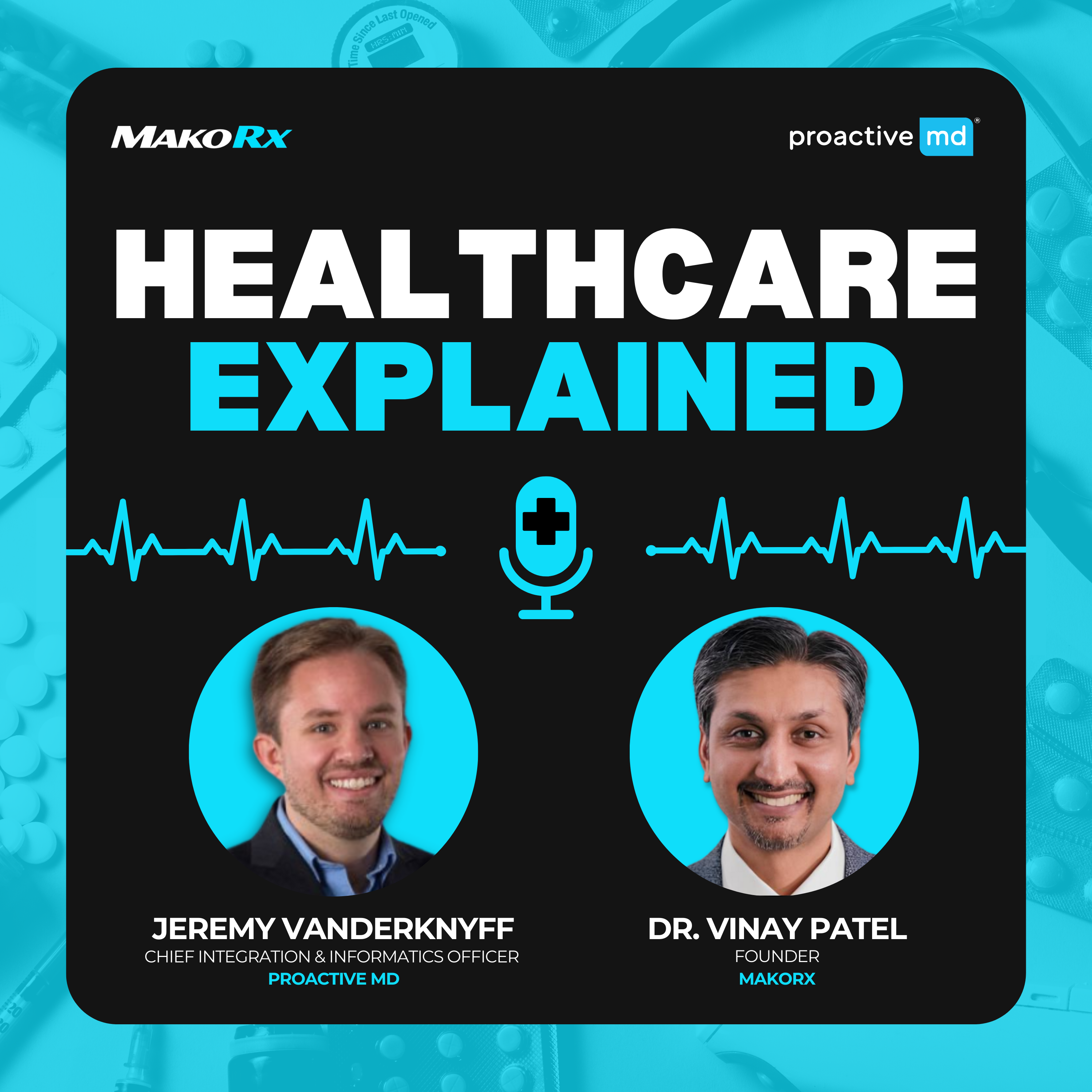
[00:00:10] Speaker B: From ProactiveMD, this is healthcare Explained. I'm Jeremy Vanderkinijf.
[00:00:14] Speaker C: And I'm Vinay Patel.
[00:00:16] Speaker B: Well, Vinay, we've got a special guest with us today following up on the last episode where we kind of talked about, oh, I guess talked about me in my dad's story. You know, we talked a lot about healthcare financing. We talked about, you know, the challenges of elder care and how it's becoming increasingly, you know, an issue that touches more and more Americans. So we've invited a guest today to help us talk through that, you know, give us some answers, hopefully, and provide some expertise on it. Well, Chris Pagliaro is joining us today. And, Chris, why don't you introduce yourself and tell us about who you are and what you do.
[00:00:53] Speaker A: Yeah. First of all, Vinay, Jeremy, thank you so much for, for inviting me and allowing me to share kind of the provider's perspective on this, this really important issue for, for our country and our world. So I'm currently the vice president of health and wellness at the Woodlands at Furman. We're an independent, nonprofit senior living community, a continuing care community in Greenville, South Carolina.
So as part of that, my responsibility covers the skilled nursing home, the assisted living, our memory support neighborhood, also our in home care programming, our rehabilitation services, and our outpatient clinics. So it's a big portfolio, kind of covers all the health care needs that our residents might have.
[00:01:32] Speaker C: Great.
[00:01:32] Speaker B: Well, Chris, for some of us, like in my story, the. The decision to move, to move my dad into skilled nursing wasn't. It wasn't much of a choice, right? I mean, he had just suffered a stroke on top of the cognitive challenges associated with Alzheimer's. But for a lot of families, it's less of maybe that catalyst moment and more of a question of when and how and how do we make that decision to move a loved one into a care facility such as yours? So, you know, as somebody who works with these families, you know, every day, how do you think families should begin approaching this question, approaching this decision and planning?
[00:02:12] Speaker A: You know, the earlier the better. I have a colleague that talks about the Sunny Day conversation.
It's so much easier to have these talks when you're not in the middle of the crisis trying to figure out who's making decisions, what does mom or dad really want?
And it's hard to have those conversations early because as a society, right. We really hate the idea of aging. We don't want to think about it. We don't want to talk about it. And if you look at just the various products, services, our media, all that glorify eternal youth and disguising that inevitable truth. I found that no one hates talking about aging more than older people. Right. There's a lot of that internalized ageism where they don't want to see that in themselves. So much so that even in our communities, you'll have the younger cohort that laments seeing the walkers and wheelchairs. We don't want to see the old people, as they describe them, the difference between a 75 and an 85 year old. So that's something we combat in our communities and in the wider world. But yet having those conversations early, having some idea of what's important to your loved one or to you about quality of life purpose going forward.
[00:03:20] Speaker B: You brought up an interesting point there that I want to unpack a little bit of this. This internalized ageism that even folks who are in that later stage of their life seem to be experiencing and internalizing as well. What do you think? What do you think drives that? And is that something that's kind of always been a constant or is it something that we're seeing more of today?
[00:03:42] Speaker A: I think it's something that is pervasive in kind of Western cultures which are very, very youth focused. Right. I mean, we know other, other cultures around the world venerate their elders. They put them in positions of trust and decision making and authority. They come together to take care of them. But in our society, we don't want to acknowledge that age is natural. Right? Aging is not an illness or a disease. If there's one wish I had for people, it's to understand that aging is not a condition that needs to be cured. It's a natural phase of life and it's on us to prepare for it. So that means taking our physical and mental fitness seriously early as possible, making lifestyle choices that, you know, promote movement, flexibility, socialization and mental stimulation. If you see any of the recent documentaries about the blue zones, right, Those are some of those key factors that help people living in those areas, in addition to diet, you know, have, have great longevity.
And then, yeah, like I mentioned, having those honest discussions about what a good life is, because a lot of people have a few core things that give them meaning in life. And as long as we can respect and empower them to do those things, they can put up with a lot of other setbacks and challenges.
[00:04:50] Speaker C: I think one of the things that came out in Jeremy's story was that it's hard to tell when your parents or loved ones are changing and that there is this red line, if you will, to know, okay, if I see these symptoms or these signs, it's time to have the conversation or go around. Do you have any sense of, from all the families that you've worked with, what some of those quote unquote, red lines are? And it's not a hard and fast rule for everyone, but just some things that, you know, it's. It's so fuzzy that people just like, oh, it's just part of getting older. It's normal. That's just the way they are.
We'll be able to take care of it and. But then it gets too far and they don't realize it or it's too late.
[00:05:34] Speaker A: Yeah. I think, you know, the challenge is defining that red line is different for every. Every relationship. For most of us, right, we are. We are deferential to our parents. We don't want to take over for them. We don't want to be disrespectful. We don't want to snoop where we, you know, we're not welcome. But at the same time, right, if you have children, you kind of count on them to look out for you and tell you the truth about your condition.
Part of the reality is that aging itself has changed, right, in the last century or so. You know, historically, humans lived and functioned basically at the same level until a sudden, you know, brief illness or an accident ended their life. So pneumonia, right, was once known as the old man's friend. That was a nickname. It was such a common cause of death. But today we know pneumonia is easily treatable with antibiotics. And there are a lot of other conditions that are like that that, you know, were once a sudden cliff at the end of an otherwise healthy life.
Today, aging is more of a long, unsteady decline instead of a steep drop off. And I think you experienced that, Jeremy, in your story with your dad's kind of ups and downs, but between the strokes, but then getting some function back and then having another setback, so, you know, it's marked by these setbacks and these rallies back and forth.
So now we see a lot more of these chronic illnesses, diabetes, dementia, much more prevalent just because people are living longer. And they're also more manageable, which helps people live longer with them. So because of that, you know, those last few years that we're able to give people, we're living longer lives, but they're more expensive years. They're physically and emotionally very challenging years as well. So elders and their loved ones need to be prepared for that reality. And Discuss those red lines as it pertains to their relationship.
[00:07:11] Speaker C: Got it. And do you have any recommendation for folks that want to do everything they can or is there some big hitter or maybe top important things that people should do when they want to keep their loved ones as much as possible in a home based setting, community based setting, for them to take a look after them before having to move them into a facility? Is there advice or some things that you see that people often overlook as people age in place?
[00:07:41] Speaker A: Yeah. You know, one of the big things that gets overlooked is the physical plant of the house itself. A lot of homes are not built to accommodate disabilities or a person with limited mobility. Houses that are on multiple stories present a challenge. Houses with steep driveways or stairs to the front entrance. So as much as possible, making adaptations to the physical plant that will allow a person to function longer, having an honest discussion about who's going to provide the care is are we expecting an aging spouse to be the primary caregiver with the understanding that, you know, that can cause their own health to deteriorate faster? Are we expecting an adult child, a neighbor, a professional? Are we going to bring in home care? Right. But deciding who, who's going to do that work and how they're going to be scheduled and compensated is important.
And then finally, you know, setting out those advanced directives, and I think you touched on some of that, Jeremy, in the last episode with understanding what I do and don't want done to prolong my life, what kind of decisions I would make if I'm not able to make them, those kinds of things, laying those out clearly in that, in that sunny day conversation really relieves a lot of the stress and confusion when that time comes where you are in Christ.
[00:08:48] Speaker B: So, Chris, whether it's somebody who is aging or their family do make the decision or come to the decision that they want to move their loved one or themselves into an assisted living facility or memory care, skilled nursing, et cetera, community or facility, you know, built for folks who need that, that extra helping hand.
How should they go about choosing a community? What are the things to look for? What matters most in the conversation that you've had with, you know, with, with families and individuals over the years?
[00:09:20] Speaker A: Yeah. Well, you know, I want to start by saying that community living in an Al or senior living, it's not for everyone and it's not the right fit for everyone. So for some, if you've got that ability to stay at home, to have an adult child or neighbor or other caregiver, great. You know, go for that. Professional care is available, but most people are going to find that it's prohibitively expensive as well.
So. But for those that do choose community living, it has a lot of pluses. So the things, you know that you want to look for are socialization, what we call kind of convivium. This idea of people living together brings out the best in other people. And that's something that a lot of times is missing in a home care situation.
You are getting your daily needs met, your ADL's, right, your activities of daily living, but you're isolated, you're in your home, it's harder to get out, it's harder to see other people. So being in a community, sometimes one of the best attributes of it is the other people that you're around.
Especially if there are other people that are similarly situated to you. Right. They're of your generation, maybe they have a similar religious affiliation to you, if that's important to you. They have similar lived experience, similar cultural expectations. All of that can increase someone's quality of life quite a bit.
[00:10:34] Speaker C: So around that, around planning and even when they're considering a facility, what kind of financial tools are available to those that aren't, that, you know, aren't to the age of being considered elderly to even consider going into home? So if you're talking about, okay, myself in 30 years I may want to go in a facility, what do I need to prepare financially now? Are there any tools, are there any vehicles available to help afford that when they get to the age and, or are there any financial tools available to caregivers to help support folks that they, you know, for loved ones that want to go into a facility?
[00:11:10] Speaker A: Yeah, so I mean, I'm not an expert in every financial tool that's out there, but Obviously, you know, HSAs, Health Savings Accounts are a great way to, to have some, some tax free funds available. And the best part about an HSA is it's tax free at all three stages. It's tax free when the money goes in, it's tax free when it's growing, and it's tax free when you withdraw it as well. But it does have a pretty low limit in terms of contribution. So it's, it's really not going to put much of a dent in the cost of elderly care. Basic retirement planning, you know, utilizing your 401ks and your IRAs, all of that, please make sure you're maxing those out to the extent you're able.
Long term care insurance does exist, I think, I think you'll find that the insurers are a little more skittish than they were maybe 20, 30 years ago about writing some of these policies. I've seen a few folks come through that have these kind of golden policies that have no daily cap or no lifetime cap on benefits. Those, those don't exist anymore.
So to the extent you have an employer that offers it or you can get your own long term care insurance, explore that it can really help defray those costs later on.
[00:12:13] Speaker B: CHRIS One of the things Vinay and I always come back to on this podcast, given our listener base, is really around the healthcare economics of it. Right before we started recording, I think you made the mistake of telling me you went to law school. So you probably have some thoughts on policy. What, what nationally, whether there are conversations going on or just from your own personal opinion, are there, are there economic policies out there that are being considered for, for this issue because none of us are getting any younger. And as you said, right, we're seeing increased burden of chronic illness among an aging population. And some of those things that might have shortened the years of life, you know, are treatable or curable. We, you know, we're living longer lives, but not necessarily for a lot of people, high quality of living for those last few years, whether it's due to illness or cognitive decline, things like that. So I'm curious to know, in your experience, is there any conversation nationally or locally around what are we going to do for the next generation as, as you know, Gen X and millennials and eventually Gen Z start hitting that, that age when we're already, it feels like staring down the barrel of a gun, both in terms of individuals and families, but also, you know, national healthcare costs that continue rising.
[00:13:38] Speaker A: Yeah, Jeremy, so this is the silent crisis in our country that a lot of people are not talking about.
We call it the silver tsunami that's coming our way in the next 20 to 30 years, we are going to have an inversion in the older cohort of our population will be much greater than the smaller or the younger cohort. And the cost of that is going to be astronomical. The systems we have in place right now are the best we've ever had in this country, but they are still woefully inadequate. You know, about 80% of our nursing home stays, long term care nursing home stays are funded by Medicaid for low income, for indigent individuals.
The reimbursement rates that providers are given by the government are inadequate to cover, you know, what real cost of care is. So for example, in My community, we don't accept Medicaid. Our private pay daily rate for a skilled nursing bed is $428 a day. Medicaid would give me half that. Okay. And I can't provide the level of care and the level of quality that I think our residents deserve for that. So we just decided not to participate. But that means that it blocks, it blocks out access to high quality care for a lot of people. So we need to look at lower cost alternatives. I don't think there's much appetite in the country for the type of tax expansion that would be required to adequately fund these systems. Medicaid being an entitlement system. Medicare cover outpatient therapy. It will cover your short term rehab stays under part A, but no long term care benefits and very little in terms of home care too. So that's a common misconception that many of our elders have and their children have, is that, well, you know, that's 65, 67, 70. Medicare will cover it. They really don't.
And even the programs that we do have, right. Social Security is a 1930s invention. Medicare, 1960s invention. The world has changed, aging has changed. We've talked about. So we need to, we need to revisit what it means to age in this country and maybe revisit those traditional models of facility based congregate care and look at more of a dispersed model where maybe we're funding family caregivers to come in and take care of their loved ones. Maybe we're funding small home models rather than these big facilities. But there's, there's a lot of work to be done on that.
[00:15:50] Speaker C: Is it less expensive to take care of a loved one in a home based care setting than it would be in a facility, whether it's long term care or short term care. You mentioned a cost for the, for the community. What would not, not that level of service? Of course you provide a greater level of service in the community than you do at home. But is there any kind of estimate or range estimates on home based care?
[00:16:12] Speaker A: I mean if you are providing that labor for free, essentially as a family member or neighbor, absolutely. It's more affordable.
But the cost is your time, your opportunity cost, your health and wellbeing as the caregiver. And Jeremy, I think you lived that the cost ahead on you and your family and your needs.
So the most expensive part of what we do is the people, right? Which is why in maybe less reputable organizations, the first thing that gets cut when you're trying to squeeze out margin is the people it's the staff.
But study after study has shown that there's a direct correlation between staffing levels and outcomes for your residents. So when you have facilities that are trying to run the minimum number of bodies, that's when you start to see more bedsores, more falls, more of these unanticipated, unnecessary hospitalizations.
So while there's a cost associated with facilities, you just want to make sure that that money is going towards the people that you're getting what you pay for. Because doing it at home, yeah, it's cheaper, but one person cannot be on duty 24 7, 365. You need to be able to share that load and distribute that load. And that's what facilities let you do, is share that cost and that load among a group of people.
[00:17:20] Speaker B: Chris, you mentioned maybe the seedier side of senior care. Some of the facilities that we've all read about and or heard about in the news in some way, shape or form. In a past life, I worked for what at the time was South Carolina dhac, so, you know, which was responsible for the regulation of long term care facilities, residential care facilities, and you know, times I worked directly with that bureau that handled health licensing and, you know, would be privy to some of these inspection reports. So, you know, I like to think that as it was, you know, as I went through this and you know, having to select a facility for my dad, when we reached that point, I knew some of the things to look for, I knew some of the things to avoid.
What can somebody who hasn't had any experience in healthcare facilities or regulatory side of healthcare, what resources are available to them to educate themselves to be able to see beyond just, you know, walk in the front door and see the scripted guided tour?
How can they best educate themselves and prepare themselves to make themselves feel better, that they're making the right decision, knowing that regardless, for many of us, like my own circumstances, there was not a facility in the world that my dad wanted to be at. So I'm having to make this decision for him. And as you know, it's a very difficult one for family members, for caregivers and care partners to, to know that they're doing something their loved one doesn't want them to do, even if it's for their own good. How do they sleep better at night? What, what ways can they educate themselves to say, I know I'm making a difficult decision, but I'm making the right one and be able to sleep at night without, without that nagging feeling of regret if, if that question makes Sense.
[00:19:11] Speaker A: Yeah. So I mean, I think, I think there's a degree of how do we assess objective quality and then how do we assess vibes, right. And make sure this is the right fit for my mom or dad or my loved one. So on the objective quality standpoint for nursing homes, any nursing home that is that accepts Medicare or Medicaid, accepts federal dollars, is surveyed by the federal government. Right. And so those results, those ratings we call five star rating because out of five stars those are publicly available on Medicare's website. You can go to medicare.govcarecompare and there's a tool there that will let you actually look up all the Medicare certified nursing homes within a certain zip code or a certain radius of you. You can view their health inspections, their staffing levels, their quality measures and it'll tell you exactly have they had a citation, what was it for? So that's a really powerful tool for those. But that doesn't contemplate assisted livings, right? Assisted livings and memory supports are not really regulated at the federal level right now. So for those, you might have to go to a DHEC dph, your state agency, you might have to go to a local or state aging resources organization. Here we have the Appalachian Council of Governments, right. And they have the ombudsman's program. So they can help you with placements when you do find a facility that you're interested in. You know, I agree with you. Look beyond the lobby, right? A lot of times you go in the lobby, oh, it's beautiful. The dining room is beautiful. But ask those questions about staffing, ask those questions about turnover.
Most, if not all facilities will have a resident council of some type, a resident government structure. Ask to see those minutes, see what kind of issues are coming up the residents are complaining about and they want help with.
Those are all good ways to kind of get a sense. Now, on the subjective side, the vibes, right, that, that comes down to individual preference. Some buildings, some communities are very focused on wellness and yoga and spirituality and that's really important to them.
Others are maybe more focused on culinary and history and learning. Right. We have a little bit of both in this community.
But that's where having that sunny day conversation, you know, before you get to this point, is so helpful because I can know, you know, my mom, she's not into this. She's not going to like these people. They have different interests versus oh, hey, these folks, they have a lot in common with my mom. My mom wants to go on cruises, right? So I'd be Looking for a community where these are people like to travel, they've been places, they want to talk about where they've been. That would be fulfilling for my mom.
[00:21:36] Speaker B: I love that. Yeah. Looking at it from, from both lenses of you can have a place that's perfect quality but not the right fit for your family member, loved one, or I guess vice versa, they seems like a great group of dudes.
But you know, the, the conditions, the quality, the oversight, the medical side may not be adequate to meet residents needs.
[00:22:00] Speaker A: I want to touch really briefly, Jeremy, just on the difference between nonprofit and for profit in senior living because there has been a big influx of for profit providers, especially in the assisted living and memory support space. And to be clear, there's not a black and white that all for profits are bad or all nonprofits are good. But there are some philosophical differences and I think it's worth just keeping that in mind when you're looking at communities to ask that question about are there shareholders and a stock price that's driving some of these decisions or is it all really about what's best to reinvest in this community, in these residents and feel out that philosophy when you're visiting.
[00:22:38] Speaker B: That's excellent advice.
So Chris, anything else you'd like us or our listeners to learn about this? This has been a huge help and I'm learning a lot that I wish I knew two years ago, to be honest with you.
[00:22:54] Speaker A: Yeah, well, you know, I think, I think one thing for people to keep in mind when you're looking ahead at financing is to keep the power of inflation in mind.
You know, these last few years, obviously we've had an unusually accelerated amount of inflation.
So much so that if you retired, you know, let's say you retired in 2010 with a million dollar nest egg that has the buying power of $500,000 now. Right. So for a lot of people who made their planning on a longer timeframe, they thought, hey, we made it, we have enough, we can go ahead and retire. But the value of their money's gone down and the cost of everything on the provider side has gone up. You know, I've raised wages for our nurses probably 30% in the last three years just to compete with hospitals, to compete with home health, to compete with agencies, to get talented people here. And so it's sort of a unfortunate self reinforcing phenomenon where you know, their, their value, their money's going down, their nest eggs, not buying the same things that once did. At the same time, our costs to run a high quality operation Continue to go up.
So as you're planning, keep that in mind that you know, you might have a number in mind that your retirement number, I would maybe double that or at least 50% more.
[00:24:05] Speaker B: Is that something where you recommend families or individuals work directly with retirement planners or financial planners to ask specifically around what does look like if I need a long term care situation when I hit this age or that age?
[00:24:21] Speaker A: Yeah, absolutely. A lot of times people are overly optimistic about their retirement planning. So while we all hope that we're going to stay independent in our homes until we're 95, that may or may not be the case. So run a few different scenarios and always keep in mind that if you're married, right. Keep your spouse in mind too, because while you may be healthy and independent, their cost may go up quite a bit over the course of that 20 or 30 or 40 years of retirement, depending on how fortunate you are to retire early.
[00:24:50] Speaker B: I think I mentioned when I told my own story of my mother had passed early. And as much as it pains me to say that, I think that was somewhat of a blessing. Not only because being a care partner is obviously very difficult, but more importantly, that was a shared nest egg, right. That they had built together and they had planned for retirement together.
And so the money that my dad needed for his care the last so many months of his of his life, that would have been her retirement money as well. That would have been the money that she would have needed had she needed long term care as well. And that's something that I do reflect on of imagine if that cost were 2x because there were two families who needed care in a, in a community or a skilled nursing facility. And you know, that's a, there's a very expensive proposition that I know unfortunately many individuals and families have to experience every day. Chris, we like to ask our guests if you have any parting words of wisdom, whether it's about this or anything else that you'd like our listeners to know.
[00:25:52] Speaker A: So one of the questions that you all sent over to me was advice for adult children or spouses who are trying to help a loved one navigate this transition. And what I would say is to remember that this process, the process of aging, although it is natural and normal, it does involve a great deal of loss and grief. Loss of function, loss of cognition, loss of independence, loss of self identity. The best way that you can help support someone going through that is by reminding them that they matter. They have a purpose in your family and in the world by being honest with them about their challenges with their physical and mental health and and facing those head on, not ignoring them or disguising them, asking the tough questions that are uncomfortable to ask. Right. It's uncomfortable to think about aging, decline, mortality, but having a clear understanding of your loved one's wishes when they're able to tell you, and a plan to execute those when the time comes.
I've seen seen a lot of people go through that end of life phase and the ones that had a plan and were very clear, everyone knew exactly what to expect, had a much more peaceful and beautiful experience in the end.
So I'll leave you with two resources that I think your listeners could benefit from as they want to explore these issues further. One is a book, Being Mortal by Atul Gawande. He's a doctor. A fantastic book about these issues about what is life really about and how to determine what's important to you in the end. And the Five Wishes. So the Five Wishes is a resource where you can get a little blue booklet that lays out in layman's terms, you know, how to write a healthcare power of attorney that's legally effective, how to write advanced directives that are legally effective in, I think, 46 of 50 states. But in plain language, no lawyer is required. So that's a great resource to have as well for yourself or for your older lawyers.
[00:27:36] Speaker B: Chris, I really appreciate you coming on.
[00:27:39] Speaker C: Yeah.
[00:27:40] Speaker B: And we'll make sure to link to the resources you just mentioned in the description in the podcast as well as on LinkedIn where we publish this. And thank you so much for your expertise and for doing the work you do, just working with the residents and creating a community where people can live out their lives and thrive with, you know, with the time that they have left. But also, I know you and your staff, you know, carry the grief that you experience and the challenges that you experience every day with you as well. And my heart goes out full of gratitude for the work that you all do. It meant very much to me, you know, and as my dad went through this, and I know it does for the thousands of people that your work
[00:28:23] Speaker A: touches every day, work is vital and it's an honor to do it.
[00:28:28] Speaker B: Great, Chris, thanks so much.
[00:28:29] Speaker A: Thanks for having me.
[00:28:30] Speaker C: Thank you, Chris.
[00:28:31] Speaker B: Once again from Proactive md. I'm Jeremy vanderkinife.
[00:28:34] Speaker C: And I'm Vinay Patel.
[00:28:35] Speaker B: And we'll see you next time.
Proactive md.